
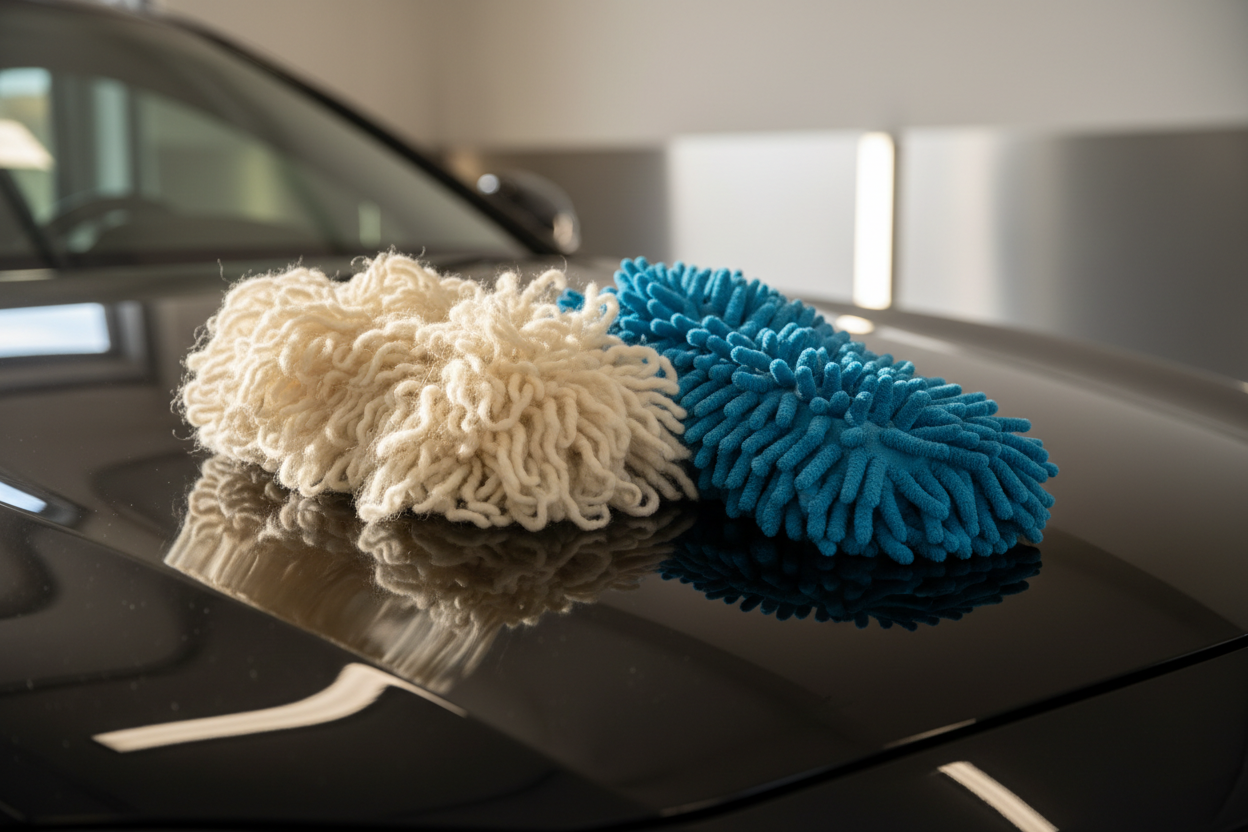
Choosing the right wash mitt is one of the most important decisions in car care. The tool that touches your paintwork has the power to either preserve the finish or slowly degrade it over time.
Modern vehicles use thinner clearcoat systems than many older cars, meaning safe washing has never been more important. Reducing friction during contact is one of the most effective ways to prevent swirl marks and maintain long-term gloss.
Two materials dominate the detailing world: merino wool and microfibre. Both are widely trusted, yet they behave very differently on paint.
Understanding those differences helps you choose the safest method for your vehicle.
For a complete overview of paint-safe washing, protection, and eco-friendly maintenance tailored to UK conditions, read our complete guide to eco-friendly car care for UK drivers.
Why Your Wash Mitt Matters More Than You Think
Every time you wash your car, tiny particles of dirt sit between your wash tool and the paint surface. If those particles are dragged sideways, they act like ultra-fine sandpaper.
Over time, this repeated friction leads to swirl marks, reduced gloss, and clearcoat wear.
This is why professional detailers focus heavily on wash media rather than just shampoo. A quality mitt should lift contamination away from the paint while maintaining strong lubrication.
Material plays a major role in how safely this happens.
What Makes Merino Wool Different?

Merino wool wash mitts are widely respected for their deep, plush fibres. These fibres allow dirt to move up into the pile rather than staying pressed against the paint surface.
This reduces friction and lowers the likelihood of micro-scratching.
Natural wool is also exceptionally soft, making it particularly well suited to darker vehicles or cars with sensitive finishes where swirl marks are more visible.
Best suited for:
- Dark paintwork
- New vehicles
- Maintenance washes
- Drivers focused on long-term paint preservation
However, natural materials require proper care. Wool mitts should be rinsed thoroughly after use and allowed to dry naturally to maintain their structure.
When maintained correctly, they provide one of the safest contact washes available.
Understanding Microfibre Wash Mitt Technology
Microfibre wash mitts are engineered using dense synthetic strands designed to trap dirt and hold large amounts of shampoo solution.
Their biggest advantage is practicality.
They are durable, easy to maintain, and well suited to frequent washing routines. For many drivers, microfibre offers a reliable balance between cleaning strength and everyday convenience.
Best suited for:
- Daily drivers
- High-mileage vehicles
- Frequent washing
- Drivers seeking low-maintenance tools
While modern microfibre is designed to be paint-safe, fibre depth can vary between products. Higher-quality mitts with longer strands generally provide better contamination control than flatter designs.

The Key Difference: Gentle vs Practical
Both materials can deliver safe results when used correctly, but they prioritise different strengths.
Merino wool focuses on maximum softness and reduced friction.
Microfibre focuses on durability and versatility.
Rather than viewing them as competing options, many experienced detailers treat them as complementary tools.
For example, a wool mitt may be preferred for upper panels and more delicate areas, while microfibre can be useful for lower sections where contamination is heavier.
Why Friction Control Defines Modern Car Care
Car washing has shifted away from aggressive cleaning toward preservation.
The safest routines now prioritise:
- High-lubrication shampoo
- Soft contact materials
- Frequent rinsing
- Gentle drying
This low-friction philosophy is one of the most effective ways to prevent swirl marks. If you want to understand how these scratches develop, read our guide explaining what causes swirl marks and how to prevent paint damage.
In the UK especially, where vehicles are exposed to persistent moisture, road film, and seasonal salt, adopting safer washing techniques helps protect paint over the long term.

Sustainability Considerations
Environmental impact is becoming an important factor for many drivers.
Natural wool is biodegradable and derived from renewable sources, aligning well with eco-conscious car care routines.
Microfibre, while synthetic, often lasts longer. This durability can help reduce overall consumption by limiting the need for frequent replacement.
Both materials can support responsible washing when paired with biodegradable, pH-balanced shampoos.
Which Wash Mitt Should You Choose?
Choose merino wool if your priority is maximum paint protection and a softer contact wash.
Choose microfibre if you value durability, convenience, and strong everyday performance.
For many drivers, the smartest approach is using both depending on the task.
Better Tools Create Better Paint
Paint damage rarely comes from one mistake. More often, it develops gradually through repeated friction during routine washing.
Selecting the right wash mitt is one of the simplest ways to preserve gloss, maintain clearcoat thickness, and reduce the need for machine polishing later.
Small decisions during washing often determine how your vehicle looks years from now.
Explore premium car wash accessories designed for safer detailing and long-term paint protection.


