
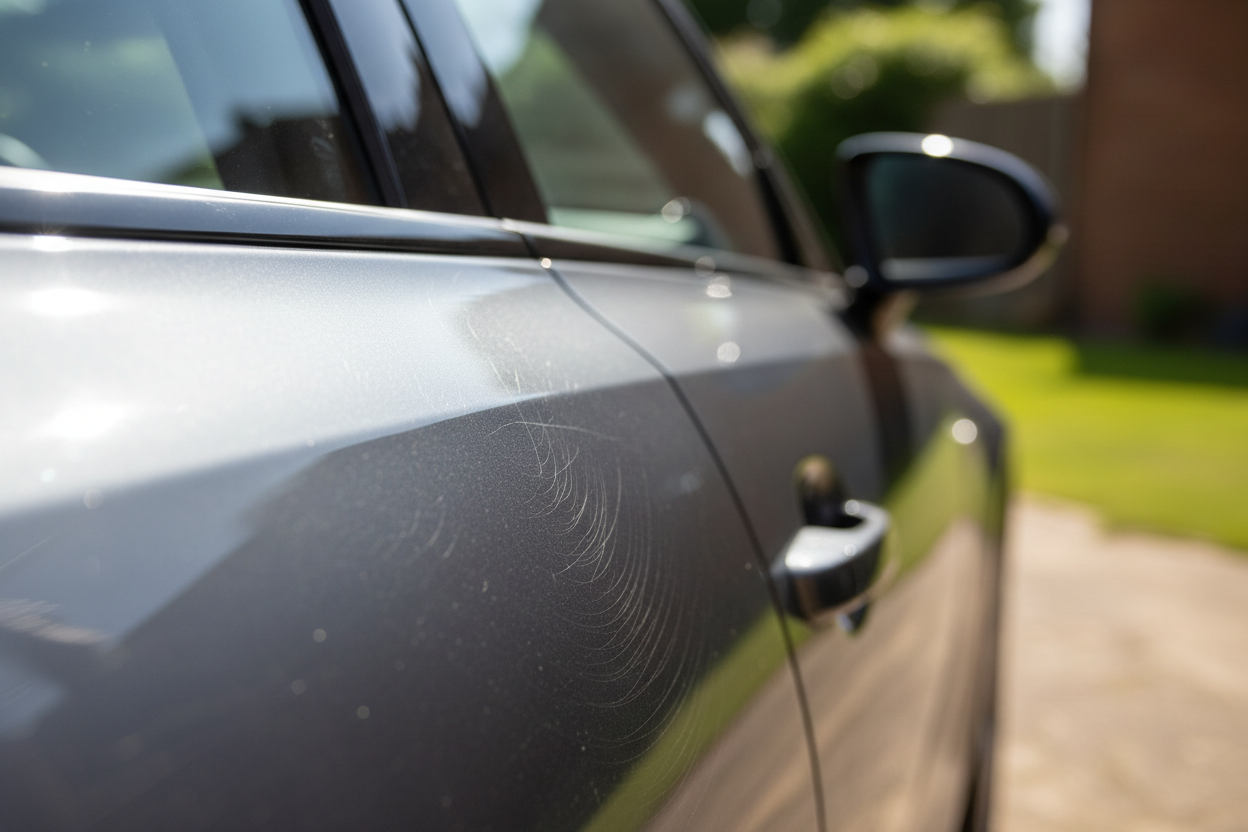
When Your Car Looks Perfect… Until the Sun Hits It
In the shade, your car looks flawless.
Step into direct sunlight, and suddenly the illusion disappears.
Fine circular scratches scatter across the paintwork, dulling reflections and draining depth from the finish. These marks — often described as spider-webbing — are known as swirl marks, and they’re the most common form of paint damage on modern vehicles.
What makes swirl marks so frustrating is that they rarely come from neglect. More often than not, they’re caused by people who wash their cars regularly.
For a complete overview of paint-safe washing, protection, and eco-friendly maintenance tailored to UK conditions, read our complete guide to eco-friendly car care for UK drivers.
What Swirl Marks Really Are (And Why They’re So Common)
Swirl marks are microscopic scratches in the clear coat layer of your paint. They don’t come from a single mistake, but from repeated contact with dirt during washing and drying.
Professional detailing brands such as Autoglym explain that swirl marks become most visible under direct sunlight because microscopic scratches disrupt light reflection.
The key issue isn’t dirt itself — it’s how that dirt is moved across the paint.

Why Modern Paint Is More Vulnerable Than Ever
Older cars used thicker, solvent-based paint systems. Today’s vehicles rely on water-based clear coats, which are better for the environment but noticeably softer.
According to industry detailing education from Meguiar’s, modern clear coats are thinner and more sensitive to poor wash technique, making them far easier to mark during routine cleaning.
In simple terms:
Paint has evolved. Washing habits haven’t.
The Real Cause: Friction, Not Dirt
Swirl marks form when dirt particles are dragged sideways across paint, acting like ultra-fine sandpaper. This usually happens because of:
-
Flat synthetic wash tools
-
Overly aggressive chemicals
-
Poor lubrication during washing
-
Incorrect drying methods
Each wash adds a few more microscopic scratches. Over time, they accumulate into visible damage.
This is why professional detailers focus less on “stronger products” and more on reducing friction.
Why Low-Friction, Eco-Friendly Washing Protects Modern Paint
Eco car care isn’t just about sustainability — it’s about control and precision.
Plant-based shampoos are typically salt-free and pH-balanced, meaning they clean without stripping protection or increasing friction. When paired with natural materials, they allow dirt to be lifted away rather than pushed across the surface.
At AM Street Cars, this approach underpins our entire range — from our plant-based shampoos to our natural wool accessories.
Why Natural Wool Is Still the Gold Standard
Natural wool wash mitts behave very differently to flat synthetic alternatives.
Each fibre is deep, flexible, and naturally lubricated, allowing dirt to be pulled into the pile and held safely away from the paint surface. This dramatically reduces the risk of micro-scratching — a principle widely supported in professional detailing education, including guidance from the Car Care Council.
This is why wool has been trusted in coach building and restoration long before modern detailing trends existed.

Drying: The Most Overlooked Source of Damage
Ironically, many swirl marks appear after the wash.
Dragging low-quality towels across drying paint reintroduces friction at the worst possible moment — when the surface is clean but exposed. Consumer advice sources regularly highlight improper drying as a major cause of paint damage, even on well-maintained cars.
Traditional chamois leather, used correctly, absorbs water into its fibres rather than dragging moisture across the panel — a slower, gentler, and safer method.

Why Eco Detailing Protects Paint Long-Term
The benefit of eco-friendly car care compounds over time.
By reducing friction, preserving protective layers, and avoiding harsh chemical stripping, eco detailing helps maintain:
-
Gloss clarity
-
Clearcoat thickness
-
Resistance to future damage
It also aligns with environmental best practice. The UK Environment Agency advises that car wash runoff can negatively impact waterways, particularly when harsh chemicals are used — another reason biodegradable, sewer-safe products matter.
A Better Way Forward for Paint Protection
Swirl marks aren’t inevitable.
They’re the result of outdated habits applied to modern paint.
By switching to:
-
Plant-based, pH-balanced shampoos
-
Natural wool wash tools
-
Gentle drying methods
-
Low-friction routines
…you dramatically reduce the need for corrective polishing later on — preserving your paint for years, not months.
In the UK, where vehicles are exposed to persistent moisture, road salt, and urban fallout, reducing wash friction becomes even more important for long-term paint preservation.
Rethinking What “Proper Car Care” Means
True car care isn’t about aggressive cleaning or instant shine. It’s about longevity, restraint, and respect for materials.
Eco-friendly detailing represents a return to those principles — blending traditional knowledge with modern chemistry.
For drivers who care about how their car looks in five years, not just this weekend, it’s no longer a niche choice. It’s the new standard.
Explore the eco-friendly car care collection from AM Street Cars.
Frequently Asked Questions:
Are swirl marks permanent?
Light swirl marks can often be corrected through polishing, but prevention is far safer than repeated paint correction.
Do automatic car washes cause swirl marks?
Many automatic washes use brushes that can trap dirt particles, increasing friction against the paint surface.
What is the safest way to prevent swirl marks?
Using pH-balanced shampoo, high-lubrication wash methods, natural fibre tools, and gentle drying techniques significantly reduces risk.


